Monday, December 23, 2019

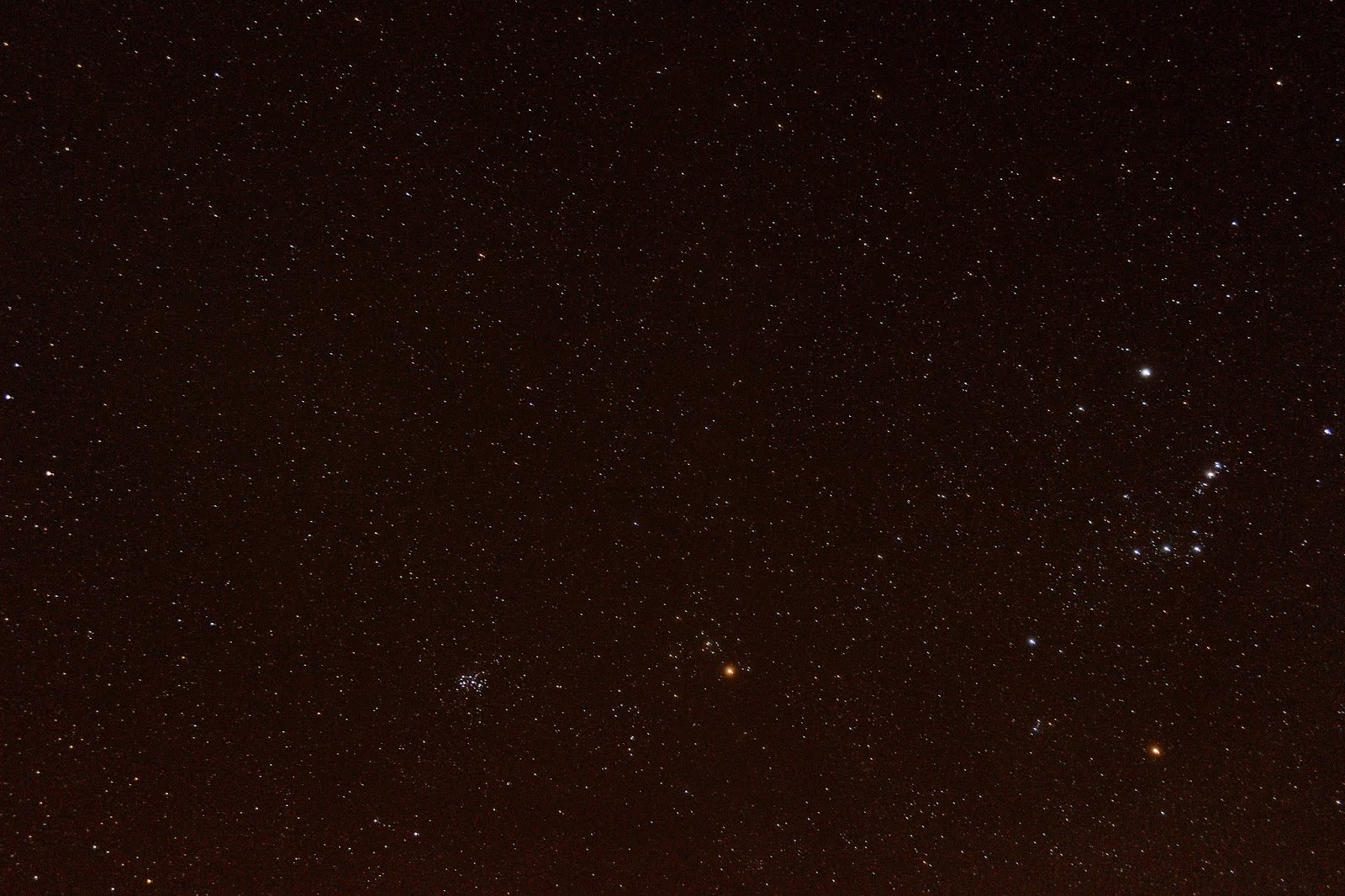
Starry Night in Spitzkoppe, Namibia Africa


I was on this great Africa trip from Kenya to Simon’s Town for 72 days by road visiting over nine African countries. I knew Africa is one of the darkest continents, with minimum light pollution based on the dark sky chart. So, I wanted to give a hand at photographing night sky.

I thought I would get many chances to photograph the sky as we were camping in most locations and in two plus months, I should get many chances to photograph the sky. But unfortunately, though we camped in most places the light pollution from the camp itself was terrible as most of the camps had big lights on to scare the animals away. Also, milky way was not rising till the middle of the night. I had just two good chances on two nights to try the sky.

Once in Masai Mara camp in Loita hills. The problem there was the chief of the tribe wanted to keep us safe from the animals, so wherever we went one of the Masai’s would follow us with a big flashlight and would be impatient that we went back to the safety of the tents. So, I could not do any time lapse photography there, but milky way was spectacular, but high up in the sky. The second chance was in early November 2019 in Spitzkoppe with lots of rocky hills around us to give some background.


Google map location


So, when we arrived at the Spitzkoppe campsite in Namibia, I decided to look around for the best place to try night sky. I found a location between two main hills from where I could photograph the night sky. But I had to cross another hurdle, our group leader should give me permission to be alone at night somewhere half a kilometer from the camp. I checked with Joe if has any objections, he did mention presence of wild animals like hyena and jackals and I had seen some footprints of these animals in the area where I was planning to put my sleeping bag. I told him bravely that I am not afraid of wild animals, though in my heart I was bit scared after the encounter with wild elephants in Victoria Falls. He hesitantly gave me permission to go. So, after the dinner I took my sleeping mat, sleeping bag and a flimsy tripod and my camera to the spot. Initially, I had already focused my focusing to infinity with auto focusing. It was not very windy but may be winds were 3 to 4 mph, which died by midnight.


I looked up at the star studded sky, no light pollution except for a couple of weak lights from the village about two miles away in the east, but the quarter moon was still visible. I slept for an hour or so as the moon was to set around midnight. Once settled, I placed my tripod on a hard surface so that it won’t shake (I think that was mistake because it did shake a bit), then took some shots to see what was the best exposure. At 20s and 2000 ISO and 3.5 aperture it was a bit too dark, so I decided to take 30s shots, which was a little bit higher as you can see the stars start tracking, but that I found only when I blew up the pictures on the computer. I set up a time lapse of 1.5 minutes delay per photograph as it would take some time to write. Looking up in the sky I could see Orion, Taurus and Pleadis constellations with no background landscape, just the sky.


I expected the path through which the stars would travel and thus I thought that they will pass from the peaks with jagged edges in the westerly direction. I faced my camera in that direction and started the time lapse. I sat and watched the sky for some time. I saw some meteors from the top of the sky.


Then I decided to take a nap. I got up many times in the middle of the night to make sure that there are no animals in the nearby area and, I can hear the camera clicking every 1,5 minutes. By about after three hours, I found that I was facing the camera in more of north-western direction than the star movements. So, I decided to focus on sugar loaf peak that is where the main constellations were disappearing. I could also see some clouds of clusters of stars in the southern part of the sky. I am not familiar with the southern sky, so I am not sure till now what those clusters are. So, I pointed the camera in that direction and took some pictures.


Then, I saw a meteor from some part of the sky. So quickly turned my camera towards that direction hoping for another one. Luckily for me one more meteor streaked from that area towards the earth. And I was pleased I caught it in the shot.


I wanted to change the direction for time lapse photos. By this time, I had less than two hours of dark sky as it got light by 5.00 am. That means I will have just 2 seconds worth time lapse video. But still I gave it a try. Here is the star movement from midnight to till about 3.00 am in the video format, which has been slowed down to half the speed so you have six seconds to view.

Next time I know what to do. But only thing is I need to find a dark area, may be in Southern California or may be another trip to Namibia!!


Time lapse video


Saturday, August 12, 2017

In preparation for Total Solar Eclipse Aug 21 2017! Be prepared for the pit falls and the things professionals don't tell!


I am getting ready to head to maximum totality zone and hoping to do some photography. Way back in Feb 1980 in India, I did some total solar eclipse photography. I had just bought a used 200 mm lens, which with Babubhai's help made it fit my then cannon camera just a two days before the eclipse. We were heading to Karwar but instead we landed up in Yellapur with Chandu's relatives. I was shooting film those days. So was very conservative as to what I shot and could not see the results immediately. But I did manage to get good diamond rings (both just before the totality and and just after the totality), orange Bailey's beads and even coronal flares. I also got some good partial eclipse photographs too. But don't remember what filters I had used for partial totality exposures. There were no eclipse goggles available at that time to us. Now I am armed with digital cameras and a 500 mm lens, so I am hoping to better than 1980. So decided to give it a try even before the eclipse. I bought Daystar solar filter through Amazon.com, which just today I learnt that it may not up to the US standards as it might damage my eyes and Amazon gave me a warning not to use that and refunded amount. But before this I had already given a try with filter, which was supposed to fit any lens from 90 to 109 mm outside diameter. It did not work well with the original style they had suggested. So finally, I used duct tape to hold the filter in place and shot some pictures. I will make some points later for wannabe photographers.
Today on recommendation from Earle Baldwin, I got a number 10 Welder's glass lens as that was the only thing available at the store . And I also got a pair of #10 Welding glasses from Harbor Frieght tool. Both of them seem to work well. I tried shooting the sun with much better results. I still need to play around with exposures and settings.
But more than that there are a few other things to be considered. So please make sure you are prepared with these unforeseen conditions. 1. Consider the altitude of the sun. As the totality occurs near midday the sun is going to be very high in the sky. If you are planning to use a tripod make sure you can aim your camera to the sun. 2. To focus the sun you have to tilt your camera towards the sun and you cannot avoid directly looking at the sun to bring it into your view finder. At this point it would be nice to have some cover over your head and view finder to block the sun as in the olden days photographers used to do to see in the screens of field cameras . I used emergency blanket, but still the sun was bright through that, may be you want to find a blanket which blocks the sun completely. 3. I used welding glass lens to photograph the sun but had to hold with my left hand in front of the lens, which was rather difficult as my hands were short to reach the tip of the lens. I barely managed at 500 mm lens extension. So if you are trying something make sure it fits snugly and flat on the lens. 4. It is best to try it out with your device prior to actual shooting day.

Sunday, March 14, 2010

ICE and WIND CHIMES on Cayuga lake


Listen to a noise filtered sound of ice pieces and chunks hitting the shore and each other when the wind created waves and the waves crashed on to the shore.

The sky at this time was filled with Snow and Canada Geese. Also Tundra Swans were creating raucous.

Next link below is quick filter created recording


This link is original recording where everything is too loud.


Saturday, January 16, 2010

East side of Cayuga Lake


I could not miss the chance of being out in the beautiful weather. So I decided to make a short trip along the back roads for red-tails, kestrels and buntings etc. But actually ended up doing some 68 miles round trip!
My plan was to go to Lansingville rd and head north on Davis road return via Center and Ridge Rd, but ended up going up to Poplar Ridge.
As I was pulling out of the drive I saw columns of insects in the air that go in up and down motion in cold days, I think they are gnats, but am not sure were dancing in front of my car. May be that is what the brought the bats out.
Along Warren and Airport there was nothing noteworthy. Via Asbury I drove to Drake road. As soon as I turned on this road, I saw a hawk sitting some distance away. I slowly rolled my car down behind it hoping to get a picture in beautiful light. Though I parked some 50 feet away from the tree, I think the hawk was watching my car. As soon as I was ready to shoot a picture, the bird took off. All I got was tip of its tail. Great pic for Id quiz! Later I got a fuzzy in flight shot. It was nice Sharp-shinned Hawk.


I saw couple of Red-tails on the way none close enough to get a picture and a dozen of Robins and about 25 Mourning Doves (MODO). From Lansingville Road I headed to Davis road, there was couple more Red-tails and three flocks of American crows at various spots along the fields, two more groups of American Robins (about 15) and two more flocks of MODO on the wires. Nothing else no larks and buntings.
As it was getting late enough, I decided to try Rafferty Road, it was almost quiet till I went past Dixon, when I first hear a few Horned Larks, as I was watching them, a couple of hundred feet away a flock of about 120 Snow Buntings (pure flock, I had estimated 100, but based on photo there were at least 120). So I pulled along the road hoping to get some pictures. They came often close to where I was but then a passing car would spook them away. Sometimes they went to the middle of the field, but then came back sat closer to the road. I don’t know why they preferred feed along the road. As sun was getting lower and lower, I decided maybe I should walk down to them. I went slowly towards them, they fed some 40 feet away from and were starting get closer and closer when another car spooked and most of them landed on a tall tree. As soon as they landed on the top almost all started preening. Additional ones joined they also preened. At any given time at 50% were preening. So it is curious to me why birds preen in groups. I have also watched MODOs, if one starts preening others also do the same. Finally all the birds were on the tree. They sat and preened for more than 20 minutes. I started get cold. Then a small flock broke off the broke and started to feed again. But I decided to head little bit north and look for kestrels. In Texas one day we counted 89 or 92 Kestrels and they were everywhere, but they were so skittish they never posed for a photo. So I was looking for one co-operative bird. But I did not find a single one. By then I had reached Poplar Ridge Road. Therefore, I decided I might as well head towards the lake and see what is there on the lake.


I came to Aurora Boat House. There were many Goldeneyes and Mallards near the shore. I enjoyed watching a pair of Goldeneyes swim and fish together. They looked so beautiful and elegant, I wondered why male got such beautiful plumage and female became so different. What kind of genetic changes occurred in their sexes. I did see not any grebes!
But sun seemed to be in hurry to go to the otherside of the shore. So I stopped and took series of pictures of beautiful sunset.

After the sunset, I headed back to Rafferty to see if any owls show up, but found none. But it was a beautiful day and was worth being out there to watch the sunset!


Also in December I came across a huge gathering of Snow Geese on Route 24 on Dec 19 th. I am always interested in group dynamics and how individuals interact with each other. SO I took some videos and have up loaded one on to youtube. It is amazing to see while some are squabbling with each others, some are blissfully sleeping in that din. When they are angry with someone, they bite the wing feathers of the opponents. It so much looked like when we were kids, girls always fought with each other and when very angry would pinch each other’s arms. Snow Geese behavior reminded me of that. Snow geese seemed humane or the girls were like snow geese!

http://www.youtube.com/watch?v=sSEmTiva6y0

Wednesday, December 2, 2009

Ivory Gull for Thanksgiving week-end


http://www.flickr.com/photos/91426175@N00/4151460407/in/set-72157622793067733/

Thanksgiving week-end means four days vacation time for me. I wanted to go somewhere. I had couple of invitations for the Thanksgiving, one in Ithaca and one in New Jersey. My New Jersey friend was quite insistent that I should come. I told her I will think about it. I wanted to go but was feeling too lazy to drive that far. Finally, I decided it was way too far to drive to New Jersey and instead would go to Niagara River to photograph Bonaparte’s Gulls. So by the time I decided this, Thanksgiving Day was almost getting to midday. Next day rain was in forecast, so postponed my Niagara visit to Saturday and Sunday, but I was still not sure if I really wanted to go.

Friday evening I read an e-mail on NYSbirds by Tom Fiore that there was an IVORY GULL seen at Cape May. This has been one of my dream birds. I had missed it by a few days in Amherst, Ontario, CA a few years ago. I had also looked for this bird on a voyage of Hurtigruten in the Norwegian Arctic Circle after IOC meeting in August 2006. This year late winter, in an awful snow storm, Ann Mitchell and I made it to Plymouth Mass, just to find out that the bird was seen by Jay McGowan earlier day around 3.25 pm and has not been seen since then. So when I saw Tom Fiore’s report, I told myself if the bird is still around on Saturday I will go. So I sent an e-mail to Bob Fogg to let me know if the bird was seen again on Saturday morning. Bob did not get my e-mail till Sunday late night. You can see slide show here.

Saturday morning just around 8.02, Tom Fiore again reported that the gull was seen in the morning. I looked at the weather report for New Jersey and Cape May. It was supposed to be nice and on Sunday around 60s. So thought I must go. I looked up driving directions. Google came up with 5 hr 21 minutes to my destination with 326 miles of drive. Then I thought, maybe I should call Ann if she was interested in joining too. Anyway decided to take showers first and see how I feel. While in shower, I decided it was too far to go to see just one bird and decided to drop the idea. As I came out of the bathroom, I straight headed to my day travel suitcase and dumped some basic stuff unconsciously. I realized my subconscious brain has made up that I am going. So in next thirty minutes, I did the dishes and tidied up the house a bit, collected all food material that I had for trip into the bag. Picked my camera and sound gear and by 9.39 AM I was out of my driveway and heading towards Cape May.
Initial drive around Binghamton was wet and windy. I listened to NPR news, Click and Clack Tappert brothers on Car Talk, who wanted to talk to Sal from Long Island again and again. On the way near the large dump, near Clark Summit I saw a raven floating in the air. I thought Raven was a great good omen. Further few miles down the road, I watched an adult Bald Eagle that enhanced my good luck I thought. I then listened to Wait Wait Don’t tell me show and by then I started losing NPR station and I was in religious belt of Pennsylvania by about noon. I decided to take a stop and pulled into Allentown rest stop. As I was about to enter ladies, I saw Ann Mitchell coming out of the ladies. So I waved out to her and told her that there is an IVORY GULL in Cape May and I was heading to see that bird and told her I was thinking of calling her in the morning but did not call. She was a little puzzled and asked me if she can leave her car at the rest stop overnight. I told her to go find out while I used the facilities. When I came out, she had already found out that she can park the car but at her own risk and she was ready to take the risk. We quickly moved her essentials such as binoculars and scope to my car on the other side of the rest house facility. Soon we were on our way to Cape May.
Somewhere in Philadelphia, I wanted to make sure the bird was still around, so I told Ann to call Tom Johnson to check if the bird was still in the same place. Tom assured us that the bird was still around and gave us the latest directions. We were hoping to catch the bird still in daylight.
We arrived at the spot around 3.20 PM to Bree-zee-lee marina, but were not very sure where to go. I saw a few cars coming out of marina that did not look like they belonged to someone who owned one of those boats in marina. So we figured this must be the place, so we drove into marina and sure enough there were tons of cars and people were looking around. As I pulled in, the gull in front of us was in fact IVORY GULL! I told Ann that is it! I quickly got my camera gear out and found my batteries were down  I knew I had another spare battery in my backpack, but was too anxious, fortunately I had my second camera too which had a battery that was charged, so I took a few pictures with it. My first picture was taken at 3.24 PM. Here is the chronology of Ivory Gull sightings:-
3.20 PM Nov 28 2009. We arrived at Bree zee lee (sounded like a warbler call, Ivory-billed Gull-Warbler?). We find the bird quickly. The bird was very active and continuously flying at fairly fast pace. It flew between the boats towards the road and then back to Cape May Harbor side and then occasionally dip into water to pick up something. Many birders were twisting their necks around to follow the bird’s movement. Bird photographers including me, we would swing our heavy camera back and forth and try to take pictures only to find that the bird is out of the frame or is too close to us and can’t even focus. At times he was just barely eight or ten feet above our head. Occasionally he would disappear between boats; he had a few spots which he visited often. Just around sunset he landed and spent some time somewhere away from us. So everyone headed towards the spot. But soon he was up and continued his flight. I wondered if this is what they did in their native land. It was so cold in their native land that they have to move continuously to keep themselves warm. He seemed to do his flights fairly effortlessly. As the sun started to hit horizon, all the gulls and the moon looked gorgeous. They all seem to have a bright fiery orange underside. Sometimes he looked bluish with water’s reflection other times he was bright orange. Later from others photo I concluded that he was picking some dead fish in the harbor.

4.37 PM. Sun is almost on the horizon, he disappeared for a few minutes. So I looked around and took some pictures of birders against the setting sun. But soon he appeared again. The sky had become pinkish now and Ivory Gull’s underside reflected pink from the plumage.
4.40 PM was my last shot of the bird.
By then Ann seemed to have frozen as the wind was still fierce, though it was supposed to have become calm by around 1.00 PM. I was totally unaware of my surrounding and cold etc. as I was too focused on the Ivory Gull. We decided to call it a day and go look for place to stay overnight, though I wanted to stay to know where he roosted.
We checked couple of known less expensive motels but they were closed for the season. Finally on the beach road we found a motel, which was open for next two days. We checked in and found some food for in a nearby diner and retired to the motel. We watched some silly movie called Foot Loose and went to sleep with a plan to get up early before sunrise.
When we woke on Sunday morning it was still dark outside. We decided to stop for some coffee and food before we headed to marina. We reached it around 7.30 AM. Chronology for Nov 29 2009.
7.30 AM Sunday 29 Nov 2009: We arrived at Bree-zee-lee marina. Everyone was milling around and there was no Ivory Gull in sight, but someone said that they had seen one at 7.00 AM in the morning. So we felt good and hoped for its return, while we had our coffee.
7.35 AM: The bird made its appearance. Followed its earlier day’s pattern of flight and then landed on one of the marina fences.
7.40 AM: On the marina fence. It was surveying the surroundings. I decided to walk on one of the floating docks to get a closer look and photograph. By then many others also had thought the same. So a dozen photographers and scope owners were walking on one of the docks closest to where the bird was with their heavy equipment and their movements made the dock shake violently. So when you took a shot of the bird, you get a nice blur of a bird. After sometime shaking reduced as the bird settled long time enough on the pole and so the photographers also got settled down after initial flurry of shots. Bird sat and preened. I actually saw it collect secretions and apply somewhere to the front which I could not see. But I did get a couple of shots that show exposed preen glands region.
7.46 AM: Bird is on the wing again. Several times landed on water and kept flying around into sun and over the water.
8.10 AM: Bird landed again close to where it was earlier. As photographers inched towards it, bird moved to a next pole at 8.10.59 AM. It sat there till 8.16 AM, while it watched us and surroundings.
8.16:59 AM: It was disturbed by people, or may be at the same time there was crow that was harassing the Great Blue Heron sitting on one of the fence posts further down disturbed the gull too. So the bird landed further away from us. The crow flew around the bird annoying it for a few minutes and the crow was gone.
8.30 AM: The bird was flying again and I got some blurry flight shots. Several times it was so close to us that I could not even focus and was too fast. In the mean time a Bufflehead and a Double-crested Cormorant distracted us to take their pictures while they were enjoying their bath and swim.
8.43.02 AM: It landed on the deck we were, behind us. The bird came to the same spot twice for no apparent reasons. To me it looked like one of the birder or a photographer was sneakily offering it something, but I may be wrong. At 8.43.26 AM it was gone.
8.45:17 AM: It was back to it s first spot close to where we were standing. It now did seem like that the bird did have some favorite locations where it returned often. It sat and watched and moved around its head a whole lot.
8.50:11 AM: I have picture taken at this time where it looks like bird shook his wet head and the water droplets are falling off his head!


Then he continued looking around facing this way and that way.
8.53:25 AM: He does that again. He shakes his head off of water!
8.56.00 AM: He is still in the same location.
I decided to try another dock from where I could get a better frontal view, though bird seemed to be further away from that spot. So we drive to other side of the marina and walk to the deck closest we could reach him. The deck is shaking madly as we walk on it.
9.04.40 AM: He shifts to another pole facing away from us. Turns around and sits for some more time watching boats and people from all directions turning his head around.
9.09.50 AM: He flew from his spot and headed straight to us.
9.09.59 Am: He lands on a pole just 12 feet away from us. I am so excited and I try to photograph him and catch half his body in my camera frame when he lands.
He sat and studied his surrounding, looked towards us, looked down and sideways. I keep shooting him trying to bracket my exposures while slightly changing focusing every time I shot. I also shot with my D50 using a 100mm macro lens. In about just 34 seconds, I took thirty one shots of him.
9.10.34 AM: He took off and went around looking for some food.
9.18.44 AM: I take a picture of him sitting on a pole towards north side. He had been there for a few minutes earlier as I spent some time watching him through Ann’s scope.
By then Ann was ready to head elsewhere and she wanted to head to car. If I had chance I could have spent full time enjoying this rare bird. I told her I will wait there till 9.30 AM.
While I was watching the IVORY GULL, when the bird was out of site or sitting at some locations for long durations, I chatted with other photographers and birders. I met Bob Fogg and he told me that he did not receive my mail. I also met Ned Brinkley, Renee Davis and many other people from different parts of the country. Some of the photographers had British accent, I wonder if they came from UK.
Later, we went to Cape May Hawk Watch platform and other locations to see birds. But nothing compared to the IVORY GULL! After a Pizza at Mario’s we headed home. I dropped off Ann at Allentown and we were happy to know that her car was still there. Except for a small delay of about 10 miles where there was a traffic jam due to an accident near Binghamton, I smoothly returned home.
We also saw some interesting insects. We had a Monarch, Painted Lady, Common Buckeye and a pair of Colias species. We also saw two Common Green Darners, one Darner sp. and an Autumn Meadowhawk.

Just after I hit I-81 from I-476 near Clarks Summit, a large owl flew over the road. I did not see any visible ears, so I presume it was probably a Barred Owl!
Thanks to Tom Fiore for keeping track of rare birds around New York and posting to NYSbirds and thanks to Tom for keeping us updated about the gulls movement!

There was some kind of soul touching spiritual satisfaction when the bird landed right in front of us and sat on for 34 sec on a pole 12 feet away from us!

Monday, September 14, 2009

Listening to migrating warblers


Many birds migrate at night and on a cloudy day with north wind birds fly at lower elevation and if you stand at right spot you can hear hundreds of them fly overhead. I was up on Mount Pleasant in Ithaca NY on 09/12/09 with others to listen to migrant birds. Every few seconds there were flight call notes given by birds. Initially, we heard mostly warblers from about 10.00 pm to 11.30 pm (at least that is when I was there) and then we started hearing thrushes and grosbeaks. I analyzed just one cut of 3.25 minutes recorded using my shotgun mic ME 67 with a minidisc recorder around 10.30 pm. In this cut I think, though I am not an expert there were 7 or 8 species of warblers along with veery, Swainson's thrushes etc. Based on the spectrograms of the calls, one of the calls matches very closely the spectrogram of Connecticut Warbler as show in Bill Evans' night flight call CD. I have posted the whole 3.25 minutes recording without filtering or tinkering along with few spectrograms in this movie I am posting here. I would appreciate comments if you have any. Have fun listening!


Meena

Wednesday, August 5, 2009

Can insects learn to trust humans?

Blue Dasher -Pachydiplax longipennis, a dragonfly, is a very curious and smart insect. Generally, when you go close to them they take off. But if you go slower and watch them while walking closer then they become amazingly tame and trust you for whatever worth you are. I was in New Hampshire attending the Northeast dragonfly meet past week (July 30 to August 2 2009). Everyone in this group is armed with an insect net, some with very long handles of 8 to 10 feet. Dragonflies and Damselflies are very finicky and fast insects and some fly very high. Even when you turn your head in their direction they take off, so if you need to identify an insect you have to net them and look at them up close. But they also have the habit of coming back and sitting on the same perch or another nearby perch. But by being patient and doing slow movements you can teach them to ignore your presence. Some of them can be so very curious of you they can watch (actually stare at you) you with intensity, while keeping an actual eye on a passing insect. You can see this in one of the youtube videos. We were in a field near Little Massabeic lake where hundreds of both male and female Blue Dashers were hanging out feeding on variety of insects. Initially, several beginner odophiles (those who love Odonates or dragonflies and damselflies) were going after them and when odophiles learnt what they are, dashers were left alone.


I was interested in getting some videos of behaviors. I found one nice cooperative male and I could go close to him inch by inch and finally I was fairly close. I started taking pictures at 10.30 am. First time I went close enough he moved to another nearby spot. I kept going closer and closer, then he became more and more confident of me, but before finally feeling comfortable, he once hit me on my brows and once on my lens cap and that convinced him that I or my camera will not eat him up. So then slowly he would pick insects that were bothering me around my head and sit on a perch in front of my camera. While eating the insects he kept an eye for any other passing insects by quickly changing his glance sideways and looking up at the sky. I kept taking videos and still pictures and once, while I was taking pictures and trying to keep the lens cap wide open for some reason my left hand index finger was sticking out and at 10.38 am he landed on that. I felt thrilled and took some pictures of him on my index finger.


It was hard to focus as my hand was shaking. Then he sallied out and came back and I offered my finger again he sat on the finger. Some more pictures while he was eating the insect, then went out for few more sallies.

In these incidences all index finger pointings were not too far from the bush where he was sitting earlier. Third time he sat from 10.38.30 to 10.39.14 am i.e would be 44 sec on finger. Next time I was facing away from the bush watching him sally for insects around my face, I offered him my finger, he came and settled on it. I looked at him closely then turned around to take him in front of the camera, which was still facing the bush for some more pics. Turned him around in various angles to get pictures and he sat and watched me while he ate. In my opinion he trusted me and knew I was not a threat. But why sit on my fingers? Was my finger a very easily viewable perch as it was different from surrounding bushes? I know they like to sit on perch from where surroundings are easily visible, but that does not mean he need to land on my finger as there were equally good perches. This time he sat on my finger from 10.41.00 to 10.42.34 am, i.e. 1 min 34 seconds while I moved him around to take pictures at different angles. He chose my fingers not for it was best perch, but something else was going on his mind.


As I was doing this phone in my pocket rang. I had to take the phone and I was being called away by Sheila with whom I was riding to get back to the car as they are going elsewhere. So I had to let my pet Blue Dasher live on his own, while I moved away reluctantly.

A similar incidence occurred a few years ago. I was photographing a female Blue Dasher who was sunning herself with her body facing sun. I took several pictures and light was not right on her. So I put my finger underneath her and picked her up and rotated her the way I wanted and put her back on the perch she was sitting and photographed her a few times. After I finished photographing, she quickly turned back to the earlier position she was sitting. After this incidence I took a walk around Sapsucker Woods trail for about half an hour. On my return, I checked out to see if the female was still at the same place and there she was blissfully perching on her favorite perch and not bothered by anybody else passing nearby!

A few years ago, in Henri Pitteir Biological Station in Venezuela, hummingbirds had become tame and were trained to land on people’s fingers. I did not know this earlier, I found hummers flying around me and was wondering why. Then I learnt about their landing on your fingers. So I put out my index finger for them to land. A beautiful male Sylph with long trailing tail landed on my finger. I was admiring him, but he had a quizzical look on his face, he looked at me and looked at the feeder as if to ask me “are you stupid why are you looking at me, take me the feeder”. So I took him to the feeder. While perched on my fingers he drank deeply till he was satisfied and then flew away.

You can watch some video clips of Blue Dasher on Youtube at following links

www.youtube.com/watch?v=C_lcwKXJK4E

http://www.youtube.com/watch?v=cQ73s0zCtnA

http://www.youtube.com/watch?v=4mCSIlpcIbo

Who does not belive that insects think?

Meena